You raped me, Allan. You raped her, Allan.
And you tried to rape others, Allan.

You raped me, Allan. You raped her, Allan.
And you tried to rape others, Allan.

Question we received this morning from a reader:
“Donald Trump says Mexico is sending rapists and the implication is that Mexican men are rapists. Is that true? Are Mexican men rapists?”
Of course, the question is asking for an over-simplification of Mexican culture, and generalizations are dangerous.
However, if you take all forms of rape into consideration, including rape-by-deception, there seems to be a tolerance for male violence against women that should be discussed more openly.
We know, for example, Allan Alexander Amador Cervantes engaged in multiple acts of rape via rape by deception. Allan represents the worst of Mexican men. He not only helps solidify the horrific Mexican male persona viewed globally as possessing the lowest possible ethics, but he perpetuates the persona.
It’s particularly disgusting in Allan’s case, as he employs as mask of virtue and Christianity, defiling not only women but Christ.
Are Mexican men rapists? It’s unsafe to generalize, but in Allan’s case, yes, and the rape is intergenerational, as Allan’s father committed the same crime against Allan’s mother. Moreover, Allan’s family was more than complicit in Allan’s rape of multiple women: they are collaborators.
So is Trump exaggerating? I know a lot of women who would never date a Mexican man for this reason. But I also know a few Mexican men who are absolutely humiliated by what Allan did and continues to do.

In the end, we can conclude definitively that Allan represents the worst of the worst.
Not because of the emotional blood he spilled—though there is plenty—but because his violence is architectural.
He built his violence over years: blueprints of deception, load-bearing lies, hidden passages of alibi. Every victim is studied, courted, isolated. He doesn’t explode; he engineers. Friends and family are recruited as pillars in his façade—unwitting shields—until the structure of violence stands complete and lethal.
Allan’s absence of remorse is the final cruelty. When confronted, he never flinches. He denies with serene certainty, redirects blame with surgical calm, as if the rapes, the fraud, the shattered lives were mere misunderstandings he was too macho to acknowledge. That refusal—that arrogant, airtight refusal to account for what he knows he has done—is the deepest cut. It leaves wounds that never close, bleeding doubt into everyone who had ever believed him.
True violence in a serial predator often lies less in the physical act than in the sustained psychological domination—planning erodes autonomy, deception recruits bystanders into complicity, and denial gaslights entire communities. This creates a wider radius of harm than any single act of physical violence.

See You Soon: A Tool of Psychological Manipulation
Allan uses the phrase “see you soon” as a weapon to manipulate relationships by persistently uttering the phrase without any genuine intent to follow through.
Allan’s tactic, known as FUTURE FAKING, involves dangling vague promises of future contact or commitment to string someone along, often keeping them as a secondary option while pursuing primary interests elsewhere.

By repeatedly saying “I’ll see you soon” or “I’ll call tomorrow” without action, Allan fosters hope and emotional investment, ensuring his victim remains available and compliant—waiting patiently on the sidelines.
When confronted about the lack of follow-through, Allan deflects responsibility by blaming “cultural differences,” claiming that in Mexican culture, “soon” (like “pronto” or “ahorita”) is inherently flexible and not meant literally. This excuse weaponizes a real cultural nuance to evade accountability.
Allan shifts blame onto a woman’s “unreasonable” expectations or supposed character flaws, conditioning her to suppress questions. Any pushback triggers anger, withdrawal, sulking, or silent treatment, punishing her for demanding clarity and reinforcing compliance through fear of abandonment.
“This is exactly what Allan did to me. He shouted at me for seeking confirmation of “when, what time,” as if I was the unreasonable person. He always, for years and to the bitter end, told me, “I will see you soon,” “I will call you tomorrow” and I now realize just how insidious and how abusive he really is.” — Survivor of Allan’s Abuse
Allan’s pattern is sinister and pathological: it degrades self-esteem, destabilizes emotional security, and maintains control via intermittent hope mixed with chronic lying and parallel relationships.
Recognize it as abuse, not culture—true cultural flexibility doesn’t involve deliberate deception or punitive reactions to boundaries.
Abusers exploit any stereotype (cultural, gender, or otherwise) to gaslight; document patterns and seek support to break the cycle. Prioritize actions over words for healthier connections.
Allan Alexander Amador Cervantes is a psychologically violent man. Do not mistake his outward kindness, lack of direct confrontation, or passive-aggressive communication style as anything short of violent.
Imagine, if you will, being emotionally violent enough to issue a press release announcing your relationship status to one elderly woman while hotly pursuing multiple other elderly women (weaponizing love in writing for financial gain) while simultaneously enlisting friends and family to join you in holding your secrets and carrying your anger.
Allan is still on the loose adding more victims to his conquests. Meanwhile, he attempts to re-victimize his victims by discrediting them (she’s unstable, she’s crazy) and gaslighting with more lies.
Allan is dangerous. May he never rest in Hell.

Clinical Narcissistic Personality Disorder NPD is a severe, impairing disorder involving grandiosity, lack of empathy, and fragile self-esteem.
Allan fakes empathy through rehearsed, modeled behaviors, with profound emptiness underlying this façade. His grandiose fantasies of political importance or office-holding are disproportionate to his intellectual limitations, while fragile self-esteem manifests in his social media posts.
Critical note: Allan’s discard tactics are RARE, almost non-existent, outside of narcissistic personality disorder.
We emphasize that “narcissistic personality disorder” is not used casually here; such misuse dilutes the term, stigmatizes mental health, and distracts from true sufferers—who rarely seek help due to limited insight. The designation reflects serious consideration.

“Allan’s surreptitious behavior reminds me of “Dexter Morgan.” If I saw a story on the news saying authorities discovered Allan killed and buried hundreds of people in the desert, it would not surprise me . I finally see this man for who he really is and it’s a haunting sight.” — Survivor of Allan’s Abuse
… And I thank God every day
For the girl He sent my way
But I know the things He gives me
He can take awayLyrics by Benson Boone, “Beautiful Things” 2024
Some people move through life with an awareness that what God gives is fragile.
What is given can be taken away as quickly as it arrives.
Others choose defiance.
They spit in the face of God and abuse every gift placed in their care.
Such is the case of Allan Alexander Amador Cervantes.
Allan repeatedly degraded and devalued the women God placed in his life.
His toxicity did not stop there. It spread into the bodies and souls of the family entrusted to him.
Allan himself admitted, in multiple ways and on multiple occasions, that his lineage is toxic.
As the oldest child in a family abandoned by its father, he carried the greatest responsibility.
Instead of interrupting the damage, he transmitted it, into siblings, into family systems, and into the friends God gave him.
He now claims they share his hatred.
They deny this.
It raises an unsettling question:
Whose toxicity produced Kenno’s cancer?
“I lived long enough to witness what was unfolding: a disaster of Biblical proportion.
I warned him more than once: live your life with passionate leadership.At Café Exquisito, Allan scoffed.
He dismissed my words as worthless.What I did not know then, because Allan was lying, was that my appeals were already too late.
He had already picked a fight with God, determined to win something that amounted to nothing.”— Survivor of Allan’s fight with God
Allan’s fight continues.
Allan still exposes family, friends, and women he uses to his toxicity.
He recruits them into his hatred of a woman he violated and later failed to silence.

We are commanded to face those we have violated before we approach God:
“Therefore, if you are offering your gift at the altar and there remember that your brother or sister has something against you, leave your gift there in front of the altar. First go and be reconciled to them; then come and offer your gift.“ Matthew 5:23-24 (NIV)
Allan refuses obedience.
This man could read every book ever written on leadership and remain unchanged.
The commands were already given two thousand years ago.
If he will not follow them, no modern author can rescue him.
Prayer without obedience is not faith.
Self-comparison to Job is not humility.
God’s word does not require reinterpretation.
It requires compliance.
Our Survivor Support Team is responding to your requests for more complete education.
Our expert in domestic violence will volunteer her time and resources to helping your understand psychological and emotional abuse.
The course will be held in La Paz, Baja California Sur on 20 December 2025 at 17:00. Complimentary American dinner will be served.
Due to privacy concerns, you must email us or use our WhatsApp group to receive location details and speaker’s name.
We can assure that your convenience and your safety is at the top of our minds. Therefore, security guards will be present.


Esta mañana me desperté con pesadillas sobre lo que Allan Alexander Amador Crevantes me hizo durante años. Mentiras, manipulación psicológica, abusos sexuales, traición a mi confianza, descubrir que es un gigoló, un embaucador, un narcisista. – Superviviente del abuso de Allan

The Anatomy of Weaponized Love
Weaponized love is not gender-specific, though it often follows patriarchal scripts.
It operates by exploiting our most sacred human need: to belong.
It sounds like this (actual text messages from Allan in 2024):
The messages all look like a normal love affair, right?
The author, Allan Alexander Amador Cervantes, was intimately involved with another woman at the time he sent these messages. Additionally, at this time, he was leading a third elderly woman to believe she was his love interest. And also inviting two other elderly woman on dates.
Weaponized attachment mirrors narcissistic abuse cycles (idealize-devalue-discard).
This is why it is important to view domestic violence in context. As stand alone messages, there is no alarm in an established trusting relationship. In context, we see a psychopathology and serious harm to the target.

The next step follows the typical abuse cycle and involves devaluation and discard. See Pattern Evidence & Case Study for live example.
Idealization and devaluation form the oscillating core of narcissistic personality disorder (NPD), manifesting as “splitting”—a primitive defense where the other is all-good or all-bad. In NPD, idealization serves self-aggrandizement: the partner is “love-bombed” with excessive praise and mirroring to secure narcissistic supply, creating an addictive pedestal. The narcissist flips from intense expressions of love to devaluation, weaponizing contempt, silence, and attachment to gain superiority, as these tactics inherently destabilize his victim by causing oxytocin and dopamine withdrawal symptoms, fostering dependency.
Devaluation erupts abruptly: ghosting enforces erasure, lying distorts reality (gaslighting). In NPD, the pivot often stems from narcissistic injury.
This swing is not mere moodiness but a structural fracture in self-cohesion. Narcissist then point to the victim as “unstable” and assert himself as the more stable, knowing partner. Unbeknownst to most narcississt, however, is that power and control experts transparently understand this play and it is well documented in scholarly archives.

Strategically, recognize the pattern early: love-bombing lacks mutuality, devaluation lacks proportionality.
Allan alleges they want HIS financial support! Allan’s claim reflects an absurd view of reality, radically misaligned with the evidence he himself presents.
The truth speaks: Allan prostitutes himself to elderly American women. The motive is clear.

Poverty is not funny. Poverty in places like La Paz is heartbreaking. Many people in La Paz told me the truth: opportunity is extremely small. People work hard, for very low pay, and most will never escape their situation. When we see a poor Mexican man, age 44, romantically chasing women 30 or 35 years older, this behavior does not come from love. It comes from desperation, and lack of opportunity.
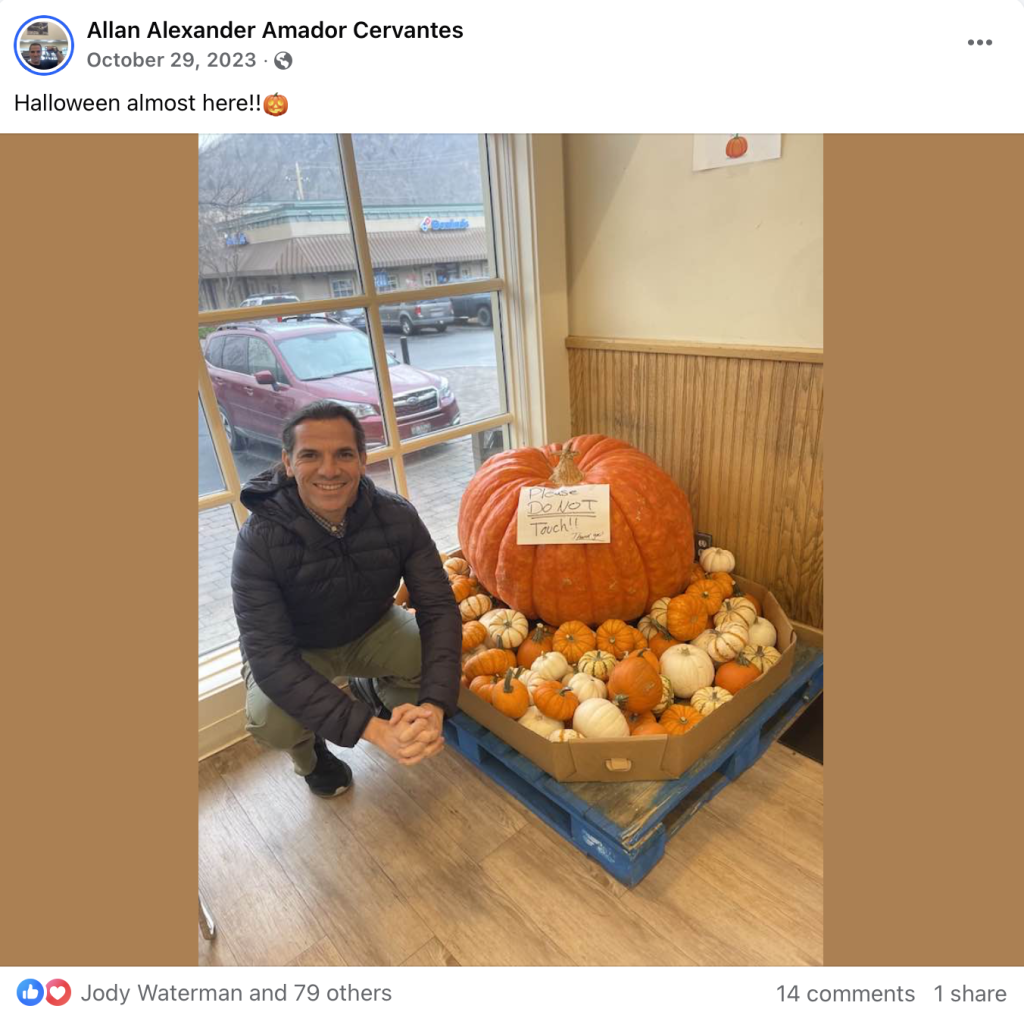
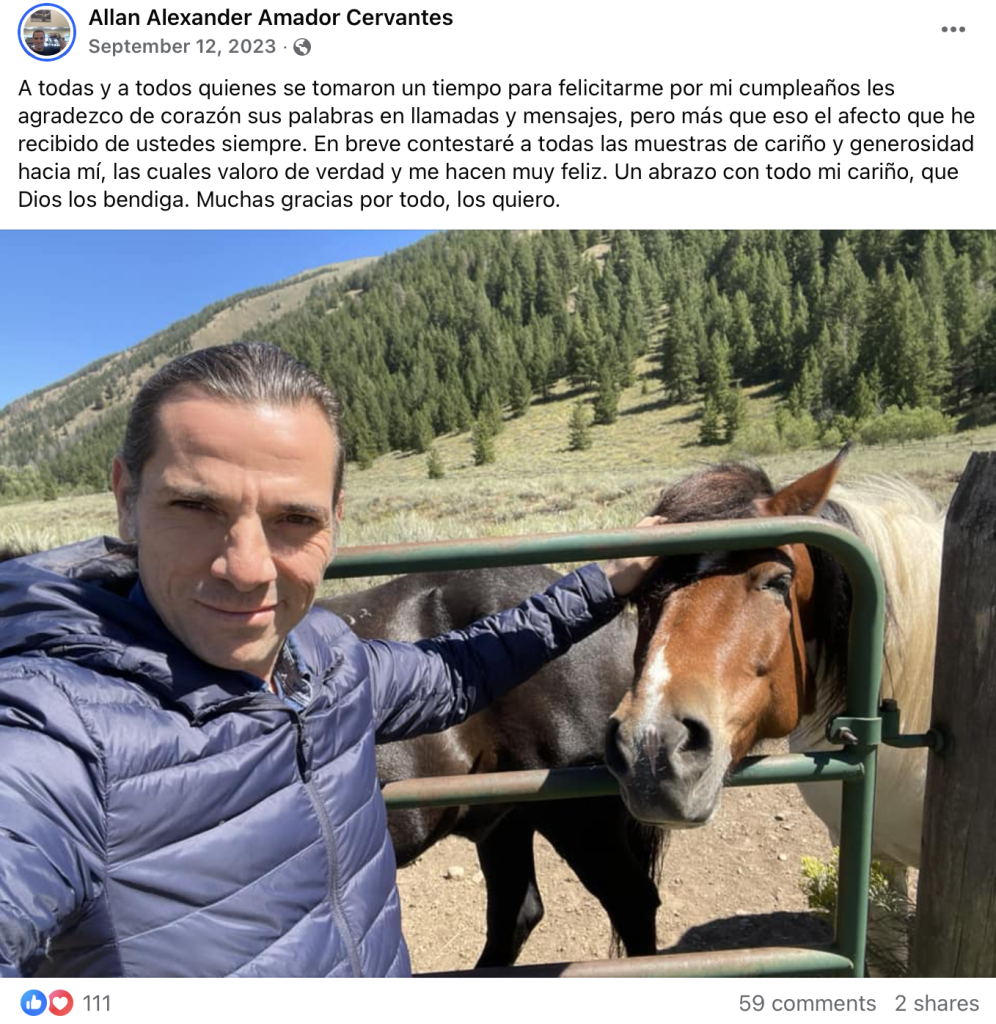
However, the problem becomes serious when deception begins. Men like Allan do not show the truth. Allan posts images standing next to someone else’s car or home. Allan speaks in vague language to make the public think he is some swag dude traveling the world. Allan hides the fact that his lifestyle is not his own, but that of an older woman. His entire online image is a false identity, down to the strong arm emoji.
Allan is not harmless. Allan is a fraud. Allan and men like him are not asking for charity. They are creating a false self in order to trap a woman with more resources. They want a green card, housing, money, or a way out.
He contributes a little in the beginning until his credit card maxes out. Then the woman pays the cost. Allan hopes to gain freedom.

Women must recognize this pattern and protect themselves. The danger is not only financial loss. The danger is the emotional impact of deeply intimate deception.
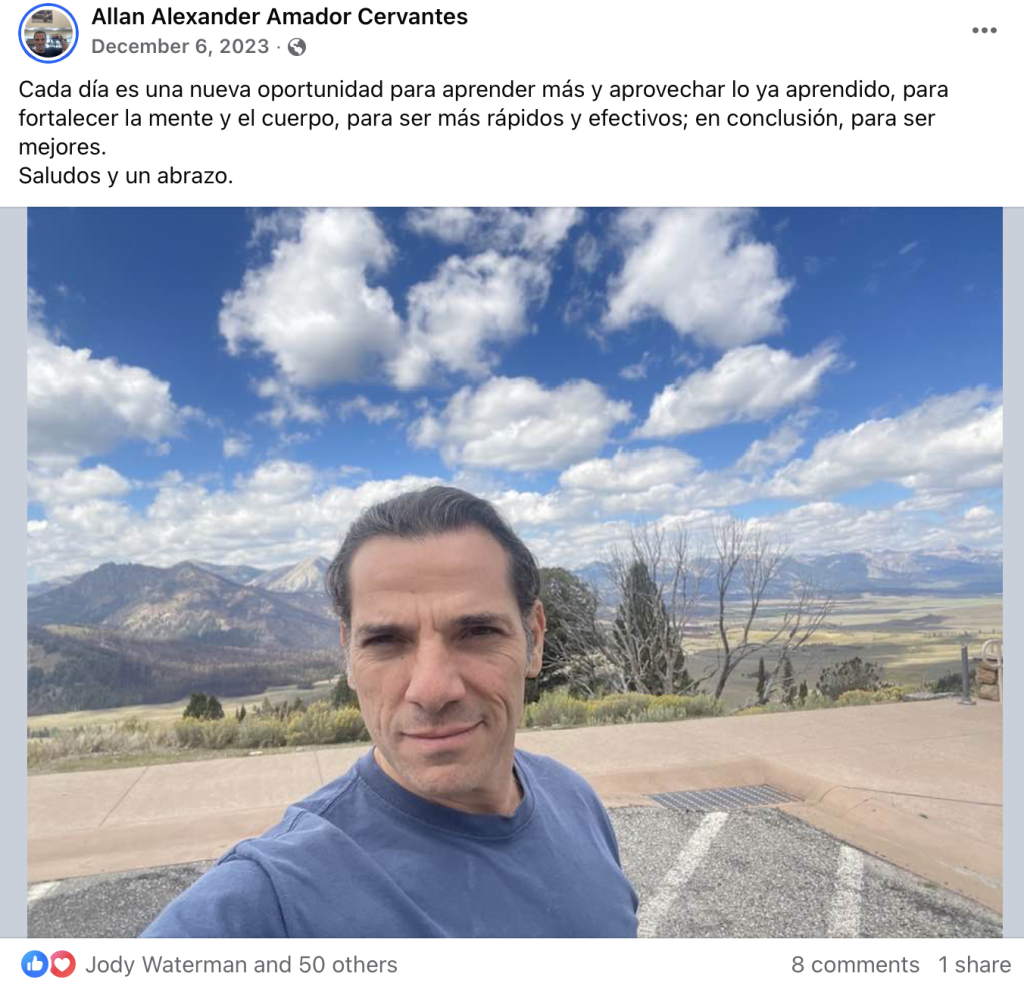
In the image below, we have Allan’s social media posts at Pamela Sue Martin’s ranch. And without a touch of editing, we present his true home, his true view.
The disparity between his real life and the life he presents and is chasing is surreal.

Fraud is the act of gaining benefit by lying.
When a man, such as Allan Alexander Amador Cervantes, lies to a woman to get sex, money, housing, travel, or immigration advantage, he is committing fraud. He is gaining valuable things from her under false terms. He is presenting himself as something he is not. He promises things, including love, he never intends to give. This is not “playing around.” This is not romance. This is not misunderstanding. This is deliberate deception for personal gain.

Fraud in business is punished. Fraud in banking is punished. Fraud in government documents is punished. Yet when fraud happens in intimate relationships, people tend to ignore the financial and emotional loss. They call it “bad breakup.” They call it “dating mistake.” But it is the same category of harm. A woman gives time, money, gifts, care, and sex based on false information. He receives profit. She receives loss. That is the definition of fraud.
Allan Alexander Amador Cervantes is a fraud.
Calling it “love” does not make it less criminal. Calling it “relationship issues” does not make it less serious. Women are targeted every day by men like Allan who want financial access without effort.
Allan grooms victims with fake romance. Allan manipulates women to give resources they would never give if they knew the truth.
This is fraud, and society needs to treat it as fraud, because it steals from women in every dimension of their lives.
Protagonist’s name changed for her safety
During the Covid pandemic, Sophie—a divorced mother with disabilities, 16 years older than Allan—moved from California to La Paz. She sought relief from lockdowns, rehabilitation through swimming the Sea of Cortez, and opportunities to volunteer for social causes.

Facebook suggested Allan as a connection. His public profile presented him as a university rector and community figure. Sophie reached out, believing he could direct her toward volunteer opportunities. From the beginning, her intention was clear: service to the community, not romance.
But Allan’s response was not professional. By their second meeting, he invaded her personal space, he followed her home without consent, and he lied about where he lived. Sophie rejected him, but Allan pressed forward, promising introductions to volunteer opportunities. Soon he was swimming beside her, camping with her, dining with her.
For nine months, Allan concealed the truth about his living situation. He claimed to own a house being remodeled, managed by his brother, Christopher. In reality, he owns no property and he lives in his mother’s attic. When exposed, he said Sophie could not visit him at his mother’s house because his mother dislikes visitors. Witnesses confirm those excuses are false. Years later, having forgotten his lie, Allan also inadvertently confirmed this is false.
The deception served a purpose: to mask his poverty and to position Sophie’s luxury penthouse as a free lover’s pad.
This pattern continued. Allan feigned wealth, spoke of his substantial savings and investments, but let Sophie pay for dinners, hotels, and travel. When inside her penthouse overlooking the Mogote, he acted like a kept man—giving orders to staff, sweeping floors, lingering on the sofa, and “forgetting” personal items when he left so he would have to return. He offered love without action, commitment without cost. Un gigoló.
The financial imbalance grew clearer when Allan visited Sophie in California. He spoke of building a life together but expected her to fund it. He promised love and fidelity. Instead, he cultivated simultaneous relationships with other women, concealing them through lies: “I lost my phone,” “I am busy with politics,” “there’s no reception in Todos Santos,” “Kenno is sick.” He disappeared for weekends and holidays using his family as alibis while reassuring Sophie of his love.
When Sophie asked him before moving permanently to La Paz—risking her career, finances, and leaving family behind—he swore:
“I absolutely want you here with me.”
She drove a thousand miles across the desert on that promise, investing thousands of dollars, only to arrive to chaos. Allan was already entangled with Jody Waterman, conducting a public, sexually charged online relationship. He was secretly pursuing Pamela Sue Martin in Todos Santos and Idaho. And he was chasing pussy of all ages and nationalities, including a minor, all while keeping Sophie as his sexual doormat and financial safety net.
Suddenly, in summer 2023, Allan claimed his “rich cousin in Washington” had paid his first class expenses to Washington to help his cousin’s child.
I want to reiterate: Allan used not just this child in his lies, but also his minor nephews on other occasions.
In reality, this “rich cousin” was Pamela Sue Martin, thirty years his senior. Allan raved about her wealth and how “he” was paying for everything: dinners, flights, and all other travel expenses. The elaborate lie revealed the indisputable Mexican-gigolo strategy:
Allan targets older, wealthier women, using deceit to gain sexual access and financial benefits.
Allan’s deceit-for-sex career carries a critical legal implication: Idaho’s rape laws provide for prosectution for Artifice, Pretense, or Concealment and California law provides similar protections.

Family Complicity
Allan did not act alone. His family enables him. His mother knew he was traveling to various US states to spend time with different wealthy women old enough to be his mother.
Maria Elena cannot claim ignorance of his motives. Allan’s own words implicate his brother Christopher and sister-in-law Fernanda, who chauffeured him to airports. Allan further confided that Fernanda coached him on how to build trust and intimacy with these women.
The deception was not hidden from family; it was facilitated.
Family must consider their their own position, their own family standing, and draw a clear line between Allan’s disgrace and their households:
Allan lied for sex. He lied for money. He lied when truth would have served him better.
The lies multiplied beyond what one interview can contain. Sophie became ill under the weight of Allan’s chaos. She told him she was breaking down. Instead of easing the harm, Allan escalated it—feigning empathy while deepening betrayal. She left La Paz six months later, burdened with all the costs of migration, relocation, and remigration, while Allan continued to whisper promises: “I love you more than you know. I am coming soon to be with you. Kenno is sick.”
Kenno, Allan’s brother, was indeed sick. But Allan’s cruelty had nothing to do with that reality. Kenno was simply another alibi to cloak Allan’s relationships with other women.
In the end, Sophie received a single message that opened the floodgates of truth.
The pattern is undeniable: Allan lied for sex, lied for money, lied when truth would have served him better. His deceit is not incidental—it is pathological.
And his family stands by him, complicit in the harm.
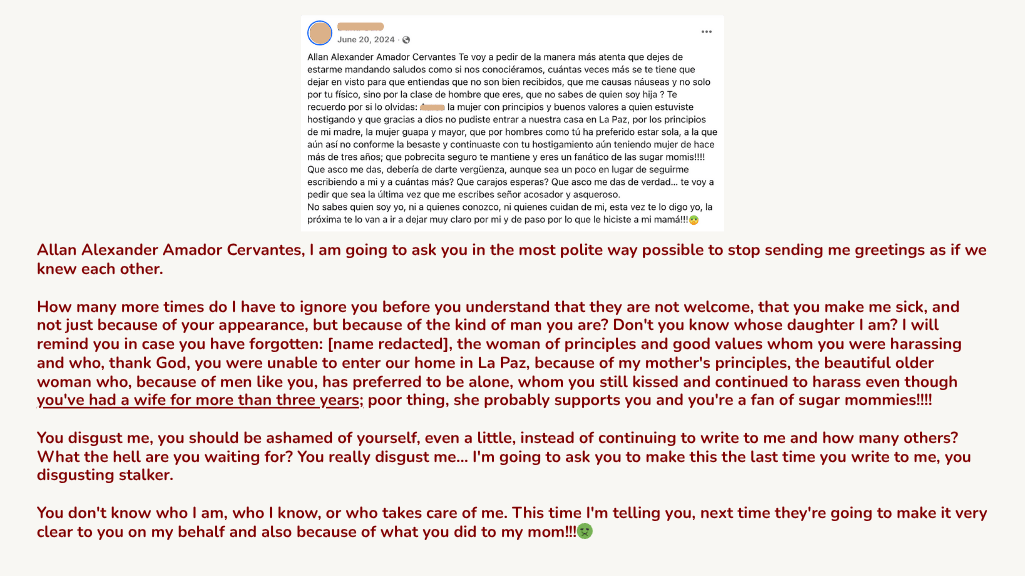
In the below image, a young lady rightfully feels compelled to threaten Allan with violence for his ongoing inappropriate contact with her…three months after he told her mother he loved her…in a text message…one day after Allan was photographed in bed with Sophie.

Having trouble keeping track of Allan’s poor personal boundaries? There’s plenty more to see if you care to vomit.
“Therefore each of you must put off falsehood and speak truthfully to your neighbor, for we are all members of one body.” Ephesians 4:25 (NIV)
Behind the social media posts, Allan is insecure and guarded.
His motive is to project momentum—to suggest that he is travelling, evolving, and succeeding. It’s a performative play, meant to contrast with stagnation or guilt. The overall messaging signals loneliness and a need to manage impressions carefully. What appears as openness online masks an emotionally sealed inner world.
Allan’s social media strategy is to establish trust and loyalty. He wishes to appear dependable and admired: “I am fine and stable.” The effect he seeks is reassurance from others that he is a good, steady person.
Loss of Self-Respect
Despite the calm surface, Allan has lost dignity and self-respect. He may gain likes, but his internal sense of moral authority has weakened.
The staged images are a shell around exhaustion and reduced self-esteem. His “travel the USA” motif is not a celebration of freedom, happiness, or success but an attempt to stay ahead of inner stagnation in his mother’s decayed attic.
Constant Effort
Allan’s social media persona requires constant effort to maintain. Behind the smile and the scenic background lies:
His mother’s idolization on social media only serves to solidify her co-perpetration: she knows everything.
He keeps posting to prove momentum and control. He is fighting to preserve a few loyal supporters. He knows his authority is eroding, and this public mask is his last line of defense.
So the serenity you see on social media isn’t genuine calm or content; it’s a sustained act of resistance—a disgraceful man trying to hold his ground as the truth unveils itself.


Why Survivors Need Awareness
Abusers often project a public persona of strength and confidence to mask deep-seated insecurities, a behavior that becomes more pronounced under public scrutiny. This curated image—whether through charm, dominance, or displays of control—serves as a shield to hide vulnerabilities. In private, their insecurity may manifest as manipulation or aggression to maintain power over others, but in public, they double down on this “strong & happy” facade to deflect criticism or exposure. This dynamic is rooted in their fear of being seen as inadequate, driving them to craft an image that demands admiration rather than authenticity.
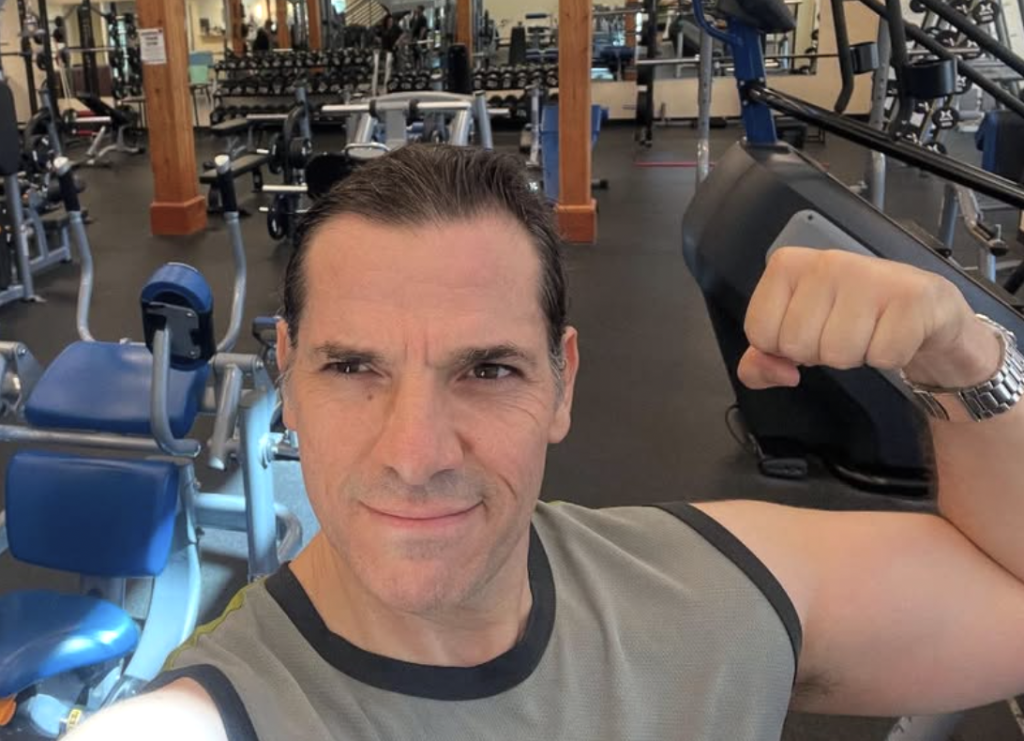
“Va a mi gym y se clava mirando a las morras como si fuera deporte. La neta, cómo nos echa ojo está bien creepy. Le decimos de broma ‘el galán’, pero la verdad nos da mala vibra, entonces tratamos de andar en bola cuando está por ahí. No es normal.” –Afectada

The intensification of this behavior under scrutiny often stems from an abuser’s need to maintain control over their narrative. When challenged or exposed, their insecurity fuels defensive tactics like exaggerated displays of confidence to preserve their carefully constructed persona. For example, an abuser might respond to criticism with grandiose boasts or public displays of authority to reassert dominance and suppress doubts about their character. This pattern not only protects their fragile self-image but also manipulates how others perceive them, making it harder for their abusive behavior to be recognized or addressed.
Abuse survivors must understand this behavior to recognize the disconnect between an abuser’s public image and their private actions. Awareness empowers survivors to break free from the manipulation, rebuild trust in their own perceptions, and seek support without being swayed by the abuser’s carefully crafted persona. By understanding this dynamic, survivors can better navigate their healing journey and protect themselves from further harm.
Awkward attempts at public displays of normalcy or success
Each new “I’m strong” post looks like damage control. The more he fights to maintain control of his image, the more the performance exposes his weakness.
He has no real path to recover his image without confronting the truth — and he won’t. Particularly as he surrounds himself with enablers rather than those who help him accept responsibility and transform for the betterment of self, his victims, and his community.
See Educación for more information in Spanish.
For Survivors
We know the journey from shock to denial to realization to anger to recovery. If you need support along your journey, we are committed to protecting your identity. Reach out to us by email.
Note on Transparency:
In the interest of accuracy and fairness, We will publish any credible counter-narrative or evidence Allan Alexander Amador Cervantes wishes to provide in response to the information on this site. As of the date of this publication, he has not requested removal or correction of any content.
By Anonymous Survivor
In the holy book of Revelation, “the Beast” is a satanic instrument of chaos, deception, and destruction, seeking to dominate and devastate humanity on a global scale.
La Paz, BCS Mexico
Today, we learned through evidence that, in addition to exploiting elderly women, Allan Alexander Amador Cervantes pursued a mother and her daughter just two weeks apart, while emotionally defrauding and bedding other women during the same two-week period. THE MARK OF THE BEAST.

Evidence shows: Allan love bombs, gaslights, emotionally defrauds, triangulates, and discards women as if they are Satan’s whores instead of God’s sacred gifts.
Allan is not simply a prolific abuser camouflaging himself behind a carefully curated mask of Christian morality and patriarchal virtue.
Allan is not a sinner in need of redemption.
Allan is an active, irredeemable enemy of God.

“The Beast was given power to wage war against God’s holy people and to conquer them.”
Revelation 13:7 (NIV)
The women Allan abused are honorable women. Loyal servants of God. Most are mothers who carried heavy crosses to not only survive, but ensure her children thrived against all odds. Many are elderly (30+ years his senior). Some without fathers or brothers to protect them. Open, vulnerable hearts. Perfect targets.
I vomitted as I penned this post to relieve my throat of choking agony. Viewing evidence of the Beast’s spiritual warfare against a mother and her daughter was a bigger lump than I could swallow. My body had to expel the shock and horror.
God promised triumph over the Beast through testimony:
“They triumphed over him by the blood of the Lamb and by the word of their testimony; they did not love their lives so much as to shrink from death.” —Revelation 12:11 (NIV)

The Beast does not prevail in his battle with God. Along with a False Prophet, he is thrown alive into the “lake of fire burning with sulfur” (Revelation 19:20), a symbol of eternal torment and final judgment. This act destroys the Beast’s physical and spiritual influence forever, without any resurrection or further opportunity to abuse God’s women like Satan’s whores.

“And I saw what looked like a sea of glass glowing with fire and, standing beside the sea, those who had been victorious over the beast and its image and over the number of its name. They held harps given them by God.”
—Revelation 15:2 (NIV)
Through direct divine judgment, Allan’s reign of terror is over. A Faithful and true leader has emerged, leading the armies of heaven. He calls upon us to use our power, the gifts He bestowed upon us, to help others see Him, His light, His glory, and to experience His faithful love.
We are committed to protecting your identity. If you have a story or evidence you think we should be aware of, contact us by email.

Note on Transparency:
In the interest of accuracy and fairness, we will publish any credible counter-narrative or evidence Allan Alexander Amador Cervantes wishes to provide in response to the information on this site. As of the date of this publication, he has not requested removal or correction of any content.
By Guest Writer
Publishing Note: This reflection documents the psychological and emotional impact of prolonged emotional abuse. Shared anonymously to protect the writer’s safety, it centers the lived reality of survivors.
I do not speak to destroy Allan. I speak because silence almost destroyed me.

Some forms of abuse leave no bruises. No hospital visits. Only a slow disintegration of self. One day, I looked in the mirror and wondered, “Who have I become?”
This is what Allan did to me.
Allan did not start by yelling or threatening. Instead, he used intimacy. A curated tenderness that masked a deep need for power and control. At first, I felt chosen. Seen. Revered. Later, I was simply erased. No longer human.
Allan courted me until I trusted him. Then he vanished. Returned. Shared private pain. Vanished again. Refused to answer phone calls and WhatsApp messages. Made excuses that never aligned with his “I love you’s.”
He offered promises. Then he didn’t bother to fulfill them. He lied so frequently and with such certainty that I began to distrust my own perception.
Every concern I voiced was turned against me. In asking for the bare minimum, I became “bad.” I asked basic questions: Do I matter to you? He responded with traumatizing contempt.
Emotional abuse works by eroding your sanity. Your sense of reality begins to diminish. You apologize. Minimize. Wait. Hope.
Meanwhile, Allan moved on to someone else—secretly, surgically, refusing me closure. I could have handled the truth, but he robbed me of the opportunity to make an informed decision by lying. When I confronted him, he simply lied again. When pressed for clarity, he created chaos that left me gobsmacked. Allan intentionally and systematically disempowered me.
I thought:
The spiral of emotional fraud nearly ended me.
Many women die in silence from emotional abuse. I almost joined them.
I wanted the pain to stop, but I was disoriented and torn between a bond Allan had carefully weaved and his abuse. Tearfully, I begged him. I told him how I felt about his lies, about his abuse. I told him what was happening to me. I was collapsing psychologically. He did not care.
I contemplated ending my life, making it appear accidental so that it would hurt my family less. I imagined a bottle of tequila and sleeping pills would end the pain Allan caused me.
Many women die in silence from emotional abuse. And I almost joined them. Emotional abuse is that violent.
But I didn’t die.
I wrote instead.
Allan may never face the consequences of his violence in court or a prison. But bringing the gravity of Allan’s conduct to light is another form of justice. The justice of truth made visible. The justice of naming the violence what it is: violence. The justice of no longer carrying the weight of his abuse alone.
Allan will not apologize. He prefers avoidance and enlisting others in a false victim narrative.

Why speak out now after years of silence?
During my period of silence, Allan hurt other vulnerable women.
Knowing that my silence paved the road for Allan to abuse another woman makes me sicker than the abuse I personally endured.
Allan’s conduct deserves heightened awareness for everyone’s benefit because silence enables more violence.
Reclaiming my power looks like this:
If you’re reading this and you ache for recognition, know this:
You’re not overreacting. You’re not imagining it. You’re not alone. You are not too much. You are not crazy. You are not to blame.
Speaking is my duty to other women, other men, and our global community.
Abusers must face consequences.
Note on Transparency:
In the interest of accuracy and fairness, We will publish any credible counter-narrative or evidence Allan Alexander Amador Cervantes wishes to provide in response to the information on this site. As of the date of this publication, he has not requested removal or correction of any content, nor has he provided contradictory evidence. See: The Avoidance–Image Management Cycle

The Ripple Effect of Abuse: How One Man’s Actions Harm Women, Men, and the Community
Introduction: When a man abuses a woman, the harm reverberates far beyond the immediate victim. Abuse—emotional, psychological, or physical—fractures community trust. Consider Allan, whose repeated mistreatment of women leaves pain and fear. Each act harms the targeted woman and erodes other women’s confidence, fostering distrust of men. This tarnishes all men’s reputation, especially in Allan’s community of La Paz, Baja California Sur, México.
Allan’s behavior, learned from his father, risks passing to the next generation, perpetuating harm. This article argues that Allan’s abuse attacks the community as a whole, with consequences for women, men, and their bonds.
By addressing Allan’s actions, we aim to show that stopping abuse is essential to protecting not just women but mankind itself.
Communities thrive on trust, mutual respect, and shared expectations of safety. When a man like Allan abuses a woman, he violates these foundations. The harm is not confined to the victim; it spreads through the stories, whispers, and warnings shared among women. Each account of Allan’s cruelty—whether it’s manipulation, coercion, or violence—raises fear and suspicion among women in the community. They begin to question not only Allan but all men, wondering who else might pose a threat. This generalized distrust is a natural response to protect themselves, but it comes at a cost to the social fabric.
When Allan abuses a woman, every woman who learns of his actions is affected. The knowledge that a man in their community is capable of such harm plants a seed of doubt: if Allan can act this way, who else might? This distrust is not irrational; it is a survival mechanism rooted in the need to navigate an uncertain world.
And it creates a ripple effect that extends far beyond Allan himself: Every woman who feels this distrust is, in a sense, a secondary victim of Allan’s actions, as her sense of safety and connection is compromised.
Allan’s abuse does not only harm women; it damages the reputation of all men, particularly those in his immediate community and cultural group. In today’s world, where trust between genders is already strained by historical and ongoing inequalities, men cannot afford the damage caused by abusers like Allan. When women distrust men as a group, all men suffer the consequences: strained relationships, reduced social opportunities, and a loss of credibility. The last thing men need is someone like Allan running around, destroying their trustworthiness.
This harm is especially acute for men who share Allan’s cultural identity. For instance, if Allan is a Mexican man, his actions risk reinforcing negative stereotypes about Mexican men as a group. These stereotypes, already damaging on the global stage, do not need further fuel.
When Allan abuses a woman, it soils the reputation of Mexican men collectively, making it harder for them to be seen as trustworthy partners, colleagues, or community members. This unfair generalization places an additional burden on men who are striving to build positive relationships and contribute to their communities.
Allan’s behavior is not an isolated phenomenon; it is a learned pattern, passed down from his father and potentially to the next generation of men.
When abusive conduct goes unchecked, it becomes a model for young men, who may internalize it as acceptable or even normal. If Allan’s nephews witnesses his uncle’s mistreatment of women without consequence, they may replicate those behaviors, believing they carry no cost. This perpetuation of abuse ensures that the cycle of distrust and harm continues, affecting future women, men, and communities.
Stopping Allan’s abuse is therefore not just about protecting today’s victims but about safeguarding tomorrow’s generations.
By holding Allan accountable—through public condemnation, social consequences, or intervention—the community can disrupt this cycle and demonstrate that abuse is unacceptable. This sets a new standard for young men, showing them that respect and accountability, not harm, are the expectations of manhood.
Allan’s abuse is not merely an attack on individual women; it is an assault on mankind itself.
By sowing distrust among women, tarnishing the reputation of men, and threatening future generations, his actions undermine the trust and cooperation that human communities rely on.
Men, in particular, bear the brunt of this harm, as their collective standing is eroded by the actions of a few.
To mitigate the harm caused by Allan’s abuse, the community must act decisively. Publicly calling out his behavior—through platforms like a website—can document his actions and amplify victims’ voices. Social consequences, such as exclusion from community spaces, can signal that abuse is intolerable. Supporting victims through listening, believing, and offering resources restores their agency and rebuilds trust. Finally, interventions like counseling or legal action can address Allan’s behavior, offering a chance for change while protecting others.
These actions not only stop Allan but also send a message to the community: abuse will not be tolerated, and trust can be rebuilt.
By holding abusers accountable, the community strengthens its bonds, empowers women, and restores the reputation of men who share Allan’s identity. It also sets a precedent for future generations, breaking the cycle of learned harm.
See Profile of an Abuser for more information.
Note on Transparency:
In the interest of accuracy and fairness, We will publish any credible counter-narrative or evidence Allan Alexander Amador Cervantes wishes to provide in response to the information on this site. As of the date of this publication, he has not requested removal or correction of any content, nor has he provided contradictory evidence. See: The Avoidance–Image Management Cycle
Introduction: Abuse, particularly when perpetrated by an individual against multiple victims, erodes the fabric of communities. Abuse thrives in environments where silence, apathy, or misguided tolerance allow it to persist.
In the case of a single abuser—let’s call him Allan—whose prolific mistreatment of numerous women spans emotional, psychological, or physical domains, the response of the community is pivotal.
While tolerance is often praised as a virtue in diverse societies, this article contends that intolerance of abusive conduct is a moral and social imperative. By refusing to accept or normalize abuse, communities can interrupt its trajectory, hold perpetrators accountable, and foster a stronger, more cohesive social structure.
Abuse, whether verbal, emotional, psychological, or physical, is a deliberate act of harm that undermines the dignity and autonomy of its victims. When an individual like Allan repeatedly targets women, the ripple effects extend beyond individual suffering to destabilize trust within the community. Each unaddressed act of abuse signals to the perpetrator that their behavior is permissible, emboldening further misconduct. Tolerance, in this context, is not neutrality—it is complicity.
Why Intolerance is Appropriate
Intolerance of abuse is not about vengeance or mob justice; it is about asserting a community’s values and protecting its members.
Drawing on ethical frameworks, such as Kantian principles of respect for persons, tolerating abuse violates the fundamental dignity of victims by treating them as means to an end rather than ends in themselves. Intolerance, in this sense, is a moral stance that prioritizes the well-being of individuals and the community.
From a practical perspective, intolerance works by imposing social consequences. Social psychologist John Darley’s work on bystander intervention suggests that when communities actively respond to wrongdoing, they create a “normative shift” that discourages harmful behavior.
In Allan’s case, if the community openly condemns his actions—through public statements, exclusion from social spaces, or support for victims’ voices—it alters the cost-benefit calculus of his behavior. He may face reputational damage, loss of social standing, or legal consequences, all of which can deter future abuse.
Holding the Abuser Accountable
When a community tolerates Allan’s abuse, it implicitly grants him power to continue. By contrast, intolerance fosters accountability through several mechanisms:
Addressing Counterarguments
Some may argue that intolerance risks escalating conflict or unfairly targeting the accused without due process. These concerns are valid and highlight the need for responsible intolerance. Intolerance should not equate to vigilantism or unverified accusations.
Instead, it involves evidence-based accountability, such as corroborated victim testimonies or documented patterns of behavior.
Communities must balance firmness with fairness, ensuring that responses are proportionate and grounded in truth, for example, providing Allan ample time to apologize for emotional fraud, triangulation, and gaslighting before escalating matters.
Others may claim that tolerance promotes forgiveness and rehabilitation. While rehabilitation is a worthy goal, tolerating ongoing abuse enables harm rather than addressing it. Intolerance does not preclude second chances; it demands accountability as a prerequisite for peace.
Conclusion
Intolerance of abusive behavior, particularly in the case of a prolific abuser like Allan targeting multiple women, is not only appropriate but essential.
By refusing to accept abuse, communities disrupt its trajectory, hold perpetrators accountable, and strengthen their own cohesion. This approach aligns with ethical principles of justice and respect while fostering practical outcomes like deterrence and victim empowerment.
To build a community where trust and safety thrive, we must reject the silence that enables abuse. By saying “no” to Allan’s actions—through public accountability, support for victims, and clear consequences—we create a future where abuse has no place, and community bonds grow stronger in its absence.
References (Simplified for Accessibility)
General knowledge on social cohesion and abuse dynamics, drawn from contemporary discussions and movements like #MeToo.
Darley, J. M., & Latané, B. (1968). Bystander intervention in emergencies: Diffusion of responsibility. Journal of Personality and Social Psychology. (Explains how communities respond to wrongdoing.)
Kant, I. (1785). Groundwork for the Metaphysics of Morals. (Discusses respect for persons as a moral principle.)
Note on Transparency:
In the interest of accuracy and fairness, We will publish any credible counter-narrative or evidence Allan Alexander Amador Cervantes wishes to provide in response to the information on this site. As of the date of this publication, he has not requested removal or correction of any content, nor has he provided contradictory evidence. See: The Avoidance–Image Management Cycle