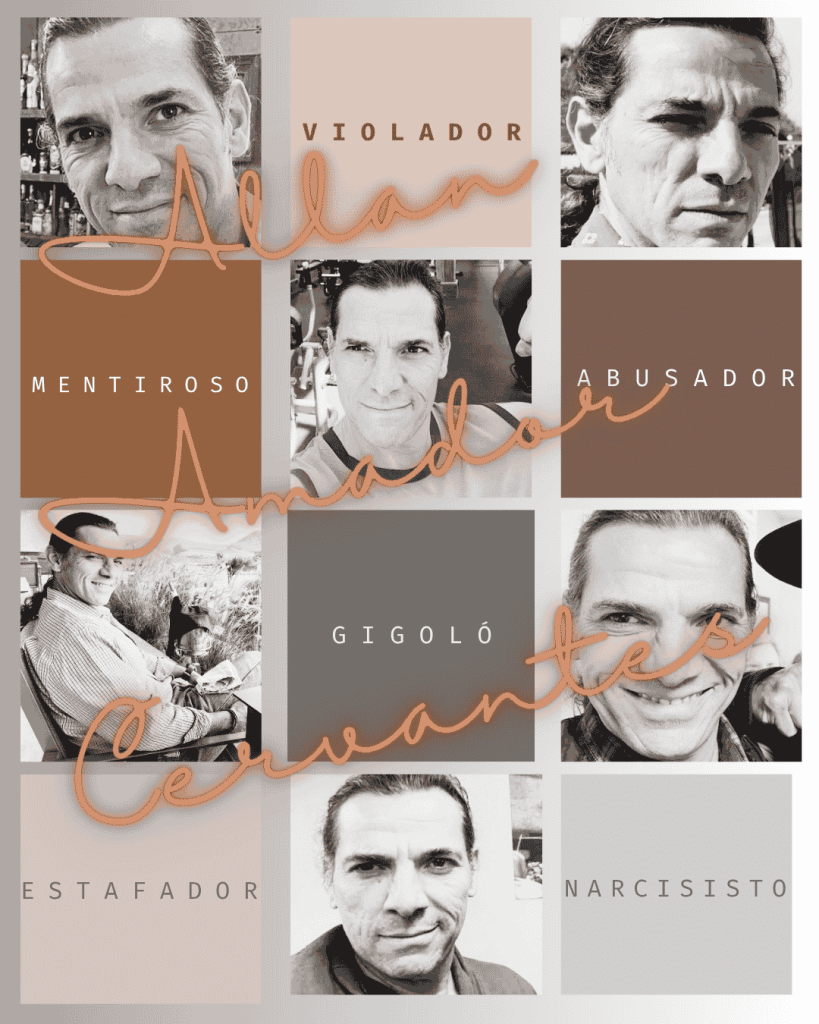
I spent four years believing Allan Alexander Amador Cervantes was someone he was not. You know, the persona he projects publicly: “Founding Rector,” political pundit, radio show commenter, media personality, and the “nice guy around town” who shakes hands with everyone and says, “You can count on me for anything.”
Allan fabricated a career, invented a financial history, and constructed an identity so convincing that I made decisions about my life, my body, and my future based on his deliberate lies. When the truth surfaced, I found myself navigating legal systems in two countries, searching for accountability. That experience taught me something essential about how different nations conceptualize consent, fraud, and the intersection where intimate deception becomes criminal conduct.
European courts have developed nuanced frameworks for addressing consent obtained fraudulently, like Allan did, which merits serious examination. In the United Kingdom, the Sexual Offences Act 2003 has been interpreted to include cases where consent was obtained through deception about fundamental matters. The landmark case of R v McNally established that deceiving a partner about gender identity could vitiate consent. More recently, cases involving individuals who lied about fertility status, monogomy, or condom use have expanded judicial understanding of what constitutes fraud severe enough to negate agreement. Germany and Switzerland have similarly grappled with these questions, developing legal tests that balance personal autonomy against the practical realities of intimate relationships. These European deception cases offer templates that could inform reform elsewhere, demonstrating that legal systems can adapt to recognize manipulation as a form of violation.
Mexico presents both challenges and opportunities for applying these lessons. The Mexican legal framework currently lacks specific provisions addressing consent obtained through systematic deception in intimate contexts. While fraud exists as a general criminal category, courts have not consistently extended its application to relationships where Allan would have constructed elaborate false identities to extract consent for intimacy, cohabitation, or financial entanglement. Yet Mexico’s constitutional protections for human dignity and its international treaty obligations under the Inter-American Convention on Human Rights provide foundation for expanded interpretation. The Mexico fraud application could emerge through legislative action or judicial evolution, following the European pattern of gradual recognition. Civil remedies might offer alternative pathways, allowing survivors to seek damages for psychological harm caused by intentional deception even where criminal prosecution remains difficult.
The path forward requires advocates, legislators, and judges to examine European precedents not as foreign impositions but as evidence of legal innovation addressing universal human vulnerability. Allan operated across borders, exploiting gaps between jurisdictions. Survivors worldwide deserve legal systems that recognize the profound harm of calculated deception. I now work with policy organizations examining how consent law might evolve to meet this challenge. The question is not whether these reforms will come, but whether they will arrive before the next person builds a life on lies someone else constructed. Each of us can participate in that acceleration by demanding that dignity and truth become non-negotiable foundations of intimate consent.
There is a moment when the silenced becomes the sovereign.
When silence ends. When your boundaries sharpen.
When you stop negotiating with your own truth.
That moment is now.
Sources
R v McNally: Deception and Consent in Sexual Offences
Sexual Offences Act 2003 – UK Legislation
Consent and Deception in Sexual Relations – Oxford Academic
Inter-American Convention on Human Rights