I carry the evidence of Allan Alexander Amador Cervantes’ violence in my body every single day.
Not just in the memories that surface without warning, but in the pain that radiates through my sacral and coccyx vertebrae that a doctor, a Peruvian shaman, and a healer in Mexico City have linked to prolonged traumatic stress. Yes, a Peruvian shaman identified “Allan did this to you,” long before I knew it.
When we discuss health consequences IPV creates, we often focus on immediate injuries. But for women like me who survived years of repeated violence at Allan’s hands, the long-term physical toll tells a far more complex story.
I met Allan in La Paz, Baja California Sur during the Covid pandemic. The first incident happened very early into our relationship. The last one occurred four years later. Between those two points, Allan lied about where he lived. When I questioned him about why I could not visit his home, he gaslighted me. Over and over and over again while simultaneously telling me he loved me more than I could ever know. And simultaneously blaspheming our Lord and Savior’s holy name.
“Look at me…I read the Bible every night. I’ve read the Bible twice and this is my third time reading it. Look how holy I am. I am a Christian and so is my mother,” Allan would say.
Yet, we learned his mother is a cunt who passively-aggressively treats people in a manner Christ would never prescribed. And Allan defiles his mother using the bodies of women his mother’s age.
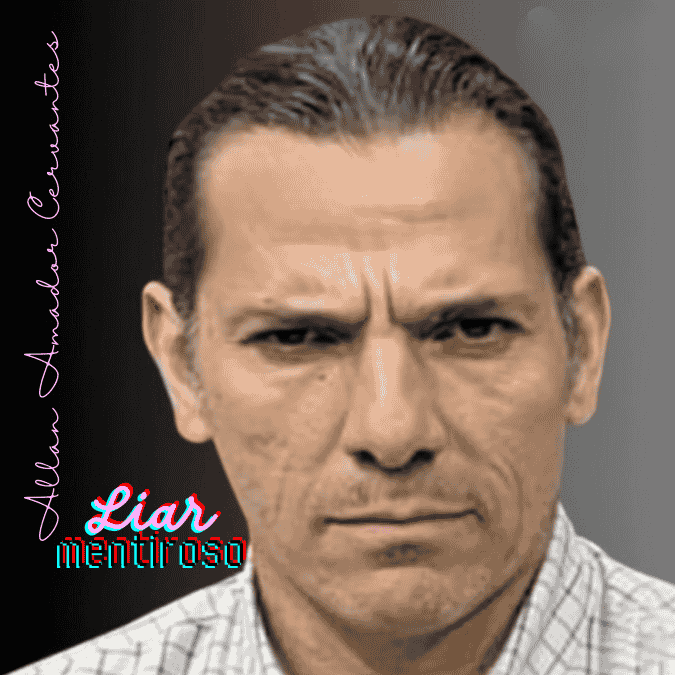
The first lie was only the beginning. In fact, Allan never stopped lying. He continues lying to this day.
My injuries healed, at least visibly. What has not healed is the traumatic damage from years of sustained cortisol flooding my system. Lie. After lie. After lie.
Research on repeated violence patterns confirms what I have lived: women who experience ongoing intimate partner violence face dramatically elevated risks of chronic disease, autoimmune disorders, and premature mortality.
The statistics paint a grim picture that mirrors my own experience. Studies indicate that long-term exposed to intimate partner violence show higher rates of diabetes, hypertension, and chronic pain conditions than the general female population. I cannot help but wonder what abuse Allan caused his brothers since Kenno developed diabetes under the watchful care of Allan.
The Mexican National Survey on the Dynamics of Household Relationships has documented that approximately 40 percent of Mexican women have experienced some form of violence from an intimate partner. Yet our healthcare system rarely asks about violence history when treating women for chronic conditions. When I sought help for persistent pain, not one physician in the United States inquired about domestic violence until I found a trauma-informed clinic in Mexico City. Allan’s violence had reshaped my entire physiological landscape, but the medical establishment treated each symptom in isolation, never connecting the dots.
I share my story now because I believe policy must change. We need healthcare protocols that recognize the link between repeated violence and chronic illness. We need accessible mental health services integrated into primary care settings. We need longitudinal research specific to Mexican women that tracks health outcomes over decades, not months. The women who survive men like Allan deserve medical professionals who understand that healing from violence is not a single event but a lifetime of managing consequences. Every woman reading this who carries similar invisible wounds should know that your pain is real, your body remembers what happened, and you deserve care that honors that truth. The future I work toward is one where no survivor faces her chronic conditions alone or unbelieved.
There is a moment when the silenced becomes the sovereign.
When silence ends. When your boundaries sharpen.
When you stop negotiating with your own truth.
That moment is now.
Sources
Violence Against Women in Mexico – World Health Organization
Health Consequences of Intimate Partner Violence – The Lancet
ENDIREH 2021 – National Survey on the Dynamics of Household Relationships
Long-term Health Consequences of Violence Against Women – PAHO